

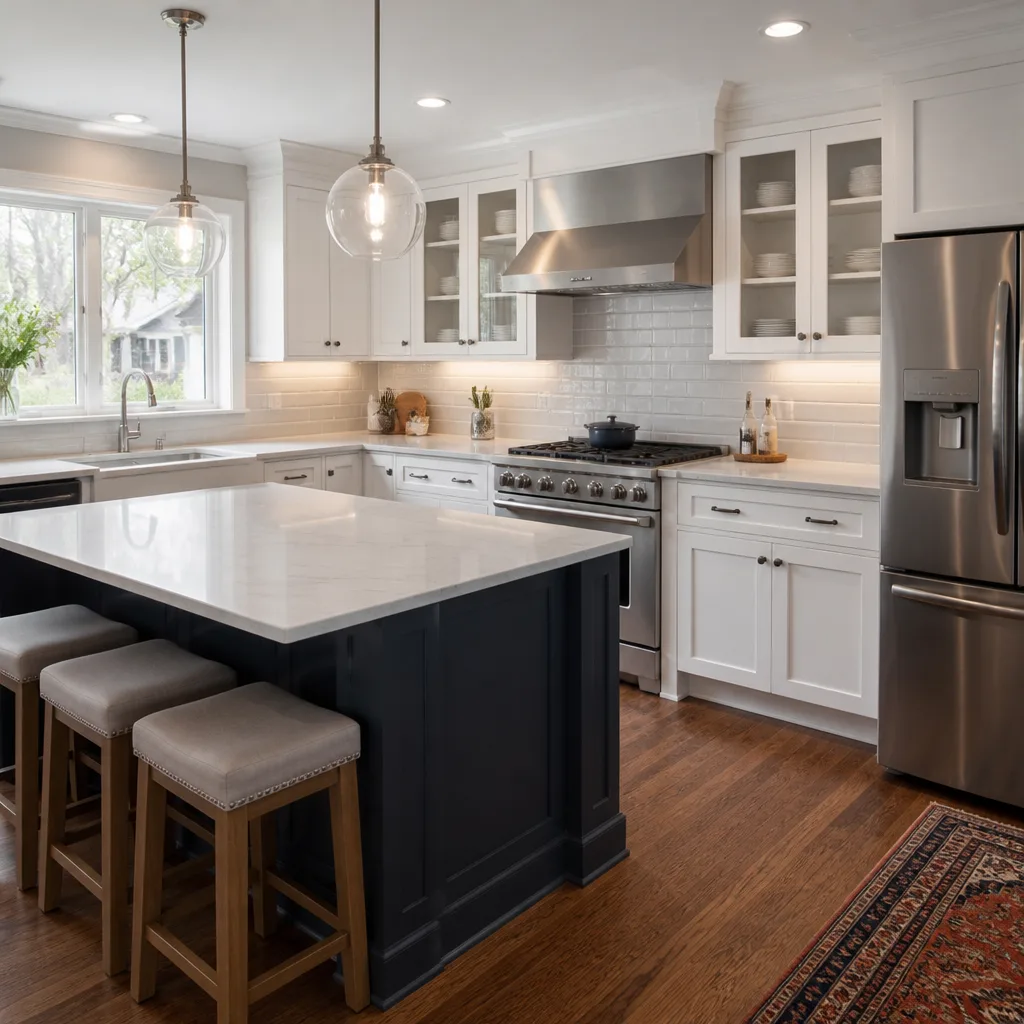
 Kitchen remodeling
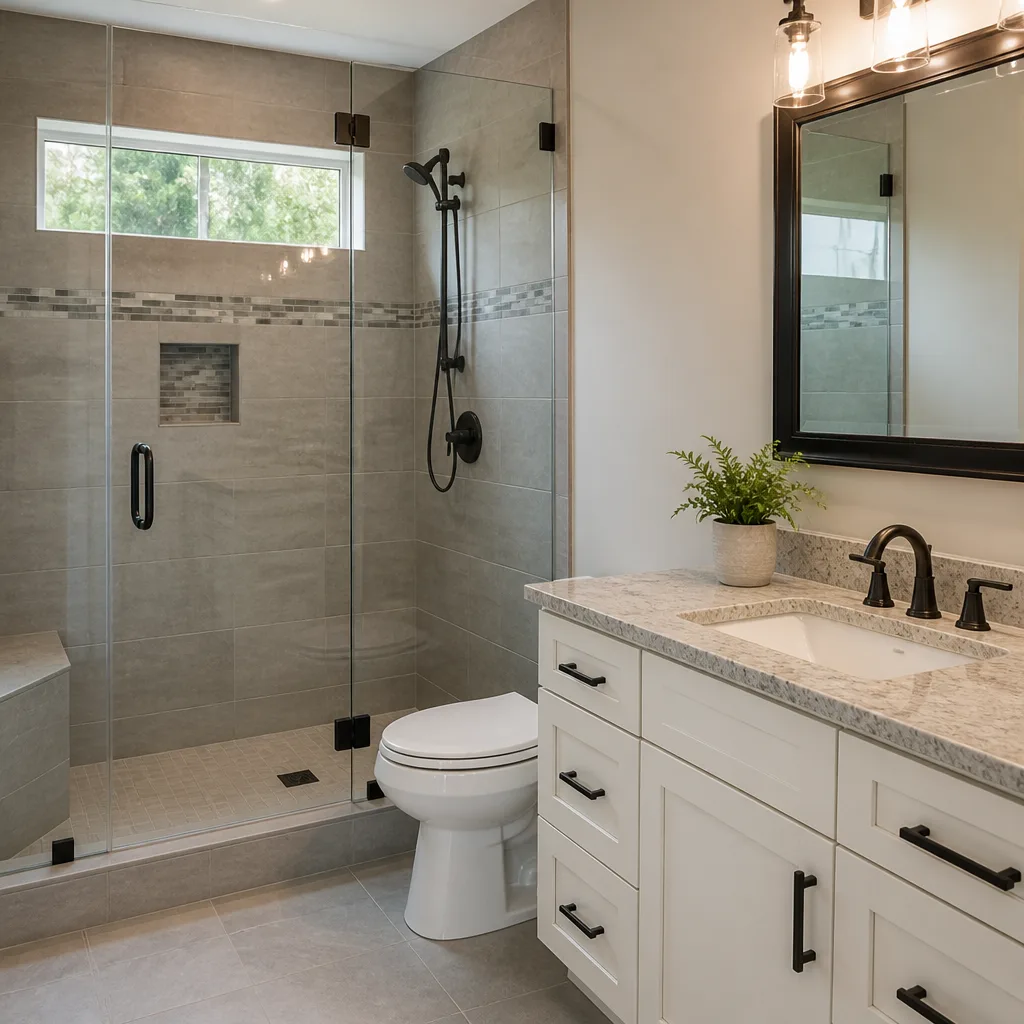 Bathroom remodeling
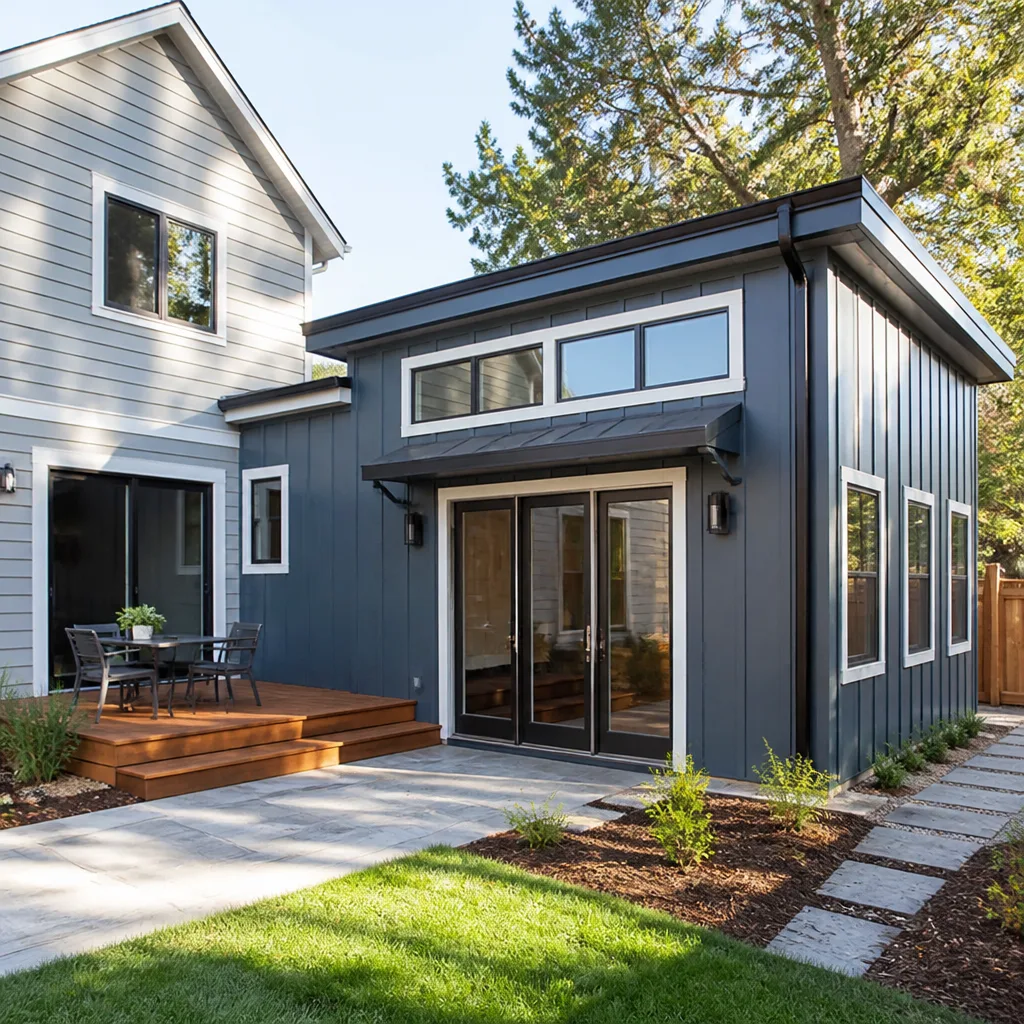 Home additions & ADU
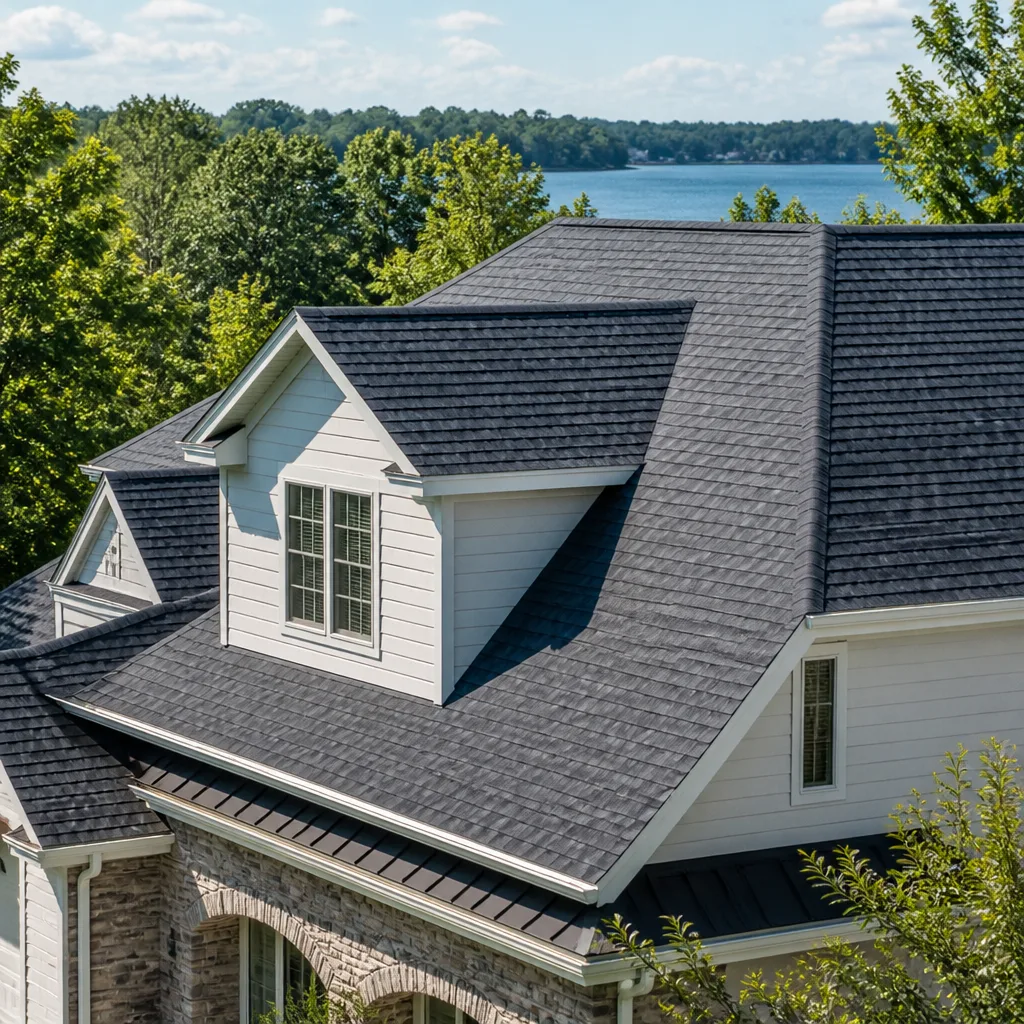 Roofing
 Windows & doors
 Driveway & pavers
 Fence
Free written scope consultation - allowances, timeline, and change-order rules on paper before a single trade is scheduled
Cambria Construction in Chinatown, CA | Timberline Contractors
We’re Cambria specialists and independent fabricators serving Chinatown, CA, and the surrounding neighborhoods. The short version: if you need Cambria quartz templated, cut, and set inside a century-old building where nothing is plumb, square, or dry, that’s the work we do. Call (866) 253-5808 for a free estimate, and expect us to spend more time measuring your walls than talking about them.
What separates our Chinatown General Contractor work from a generic countertop shop is simple: we template against the room you actually have, not a showroom drawing. That matters here more than anywhere in the Bay Area, because a 1910 brick walk-up with bowed timber floors and moisture-wicking masonry will punish a sloppy template in ways a suburban kitchen never will. We’ve built our approach around that reality. Whether you’re planning a full kitchen remodel, a backsplash replacement behind a commercial range, or a Cambria island in a loft renovation, we handle the substrate and the slab as one job.
Why Chinatown Residents Choose Us for Cambria Service
Nelson Fung grew up in Chinatown, Los Angeles, spending Saturday mornings at Saigon Plaza while his grandfather debated tile prices at the hardware stalls on Broadway. For this team, working in Chinatown isn’t a service call. It’s working in a building fabric we understand in our bones. We know what happens when a Cambria slab meets a wet masonry wall. We know which buildings on Stockton and Grant have original timber floors that have moved half an inch in 90 years. And we know that a tenant-improvement remodel behind an active dim sum restaurant means sequencing your countertop install around grease-duct work and Type I hood upgrades, not the other way around.
We’re an independent Cambria service provider. We’re not authorized or sponsored by Cambria, and we don’t pretend otherwise. Every slab we set is templated and dry-fit to the room it’s actually going into. Our credibility comes from cutting quartz for occupied historic storefronts and walk-ups where a millimeter of out-of-square wall matters, and where the wrong seam adhesive will fail in two foggy seasons. Nelson learned the trade formally at Los Angeles Trade-Technical College and spent years on Eastside bungalow remodels and mid-size commercial builds before founding Timberline Contractors. That’s the difference. He’ll tell you when a slab can be re-set and when the substrate is moving and replacement is the honest answer.
We bring the full scope of Cambria service to Chinatown: countertops, backsplashes, and kitchen islands. We use Cambria-approved color-matched seaming adhesive and edge kits on every visible seam. We don’t substitute generic fillers. When a slab is cracked but the run is sound, we repair and re-set. When the cutout is compromised or the floor beneath it is still moving, we recommend replacement rather than chasing a crack that will come back in a year.
Styles & brands we work with
Common Cambria Construction Problems We Solve in Chinatown
These are the failure modes we see repeatedly in Chinatown’s specific building stock, and what we do about each one:
- Efflorescence and dark staining bleeding up from damp brick. Many Chinatown buildings sit on former marshland near the bay. Fog, damp air, and poor drainage keep brick and unreinforced masonry perpetually moist. Behind a Cambria countertop, that moisture pushes mineral salts and dark staining right up into the slab edge and seam. When we reinstall, we address the moisture path first. This usually means scraping and sealing the substrate, adding a vapor barrier, and only then setting the Cambria.
- Hairline cracks and chips at sink cutouts and cooktop corners. An oversized Cambria slab spanning a sagging original timber floor without proper shimming will eventually crack at the weakest point: the sink cutout. Do it right the first time or explain yourself twice. In Chinatown’s walk-ups, we shim a new subtop to bring the run level before dry-fit, and we inspect the floor joists under the span. If the floor is still moving, a heavier corbel or additional support is non-negotiable.
- Delamination of a Cambria backsplash panel on a bowed plaster-over-brick wall. Century-old Chinatown walls are nowhere near plumb or square. Adhesive alone will not hold a full-height Cambria backsplash on a bowed wall that’s been skim-coated twenty times. We backer-board or skim-coat the wall to a true plane before we set the panel. It takes an extra day. It’s the difference between a backsplash that lasts ten years and one that pops off the wall in two.
- Out-of-square overhangs and seam gaps from templating against old storefront walls. A banquet-kitchen wall on Grant Avenue can be two inches out of square over eight feet. If your fabricator templates against the existing wall without correction, you get a Cambria run with a wedge-shaped overhang and a seam gap wide enough to catch a dim sum chopstick. We template for the finished plane, not the rough wall, then dry-fit before cutting.
- Grease and steam coating quartz runs adjacent to commercial kitchens. Chinatown is the birthplace of dim sum and banquet-hall restaurants with massive Type I hood systems and grease-laden ductwork. Quartz runs near those hoods need grease-resistant sealing discipline and cutouts planned around future duct upgrades. We specify that from day one, not as an afterthought when the health inspector arrives.
Cambria Service in Chinatown: What Local Conditions Mean for Your Equipment
Here’s the one thing that separates Cambria work in Chinatown from Cambria work anywhere else in the Bay Area: the neighborhood where dim sum took root still runs on commercial kitchens layered onto century-old shells. A banquet hall on Stockton or a narrow-frontage restaurant off the Grant Avenue corridor generates heavy grease and steam every single day. That grease doesn’t stay in the kitchen. It migrates. It coats adjacent quartz runs, settles into seams, and works its way behind backsplash panels. If your Cambria slab is sealed with a generic product or templated without thinking about the Type I hood and duct upgrades the building is going to need in five years, you’ve bought yourself a problem that lives inside the walls.
The practical upshot for Cambria owners in Chinatown: sealing discipline matters more here. Cutout placement matters more here. And the relationship between your countertop and the mechanical systems above it matters more here than it would in a newer building with modern exhaust and a dry, plumb envelope. When we template a Cambria run in a Chinatown restaurant or apartment, we’re looking at the duct chase above the cook line, the floor joists below the island, and the moisture content of the brick behind the backsplash. That’s not showroom talk. That’s the actual job.
Cambria Models & Products We Service in Chinatown
We work with the full Cambria line, but the models we set most often in Chinatown are Ella, Brittanicca, Torquay, and Whitehall. Ella is a warm cream marble-look quartz that reads beautifully against the red brick and dark timber common in older Chinatown interiors. Brittanicca and Whitehall give you the white and gray veined marble look without the staining headaches that real marble brings to a humid, grease-adjacent kitchen. Torquay is a soft gray-beige that hides the fine haze of fog-season damp better than cooler whites.
On parts and materials, we specify Cambria-only slab material and Cambria-approved color-matched seaming adhesive and edge kits. We won’t substitute a generic filler on a visible seam, even if it saves a few dollars. Most of the common edge profiles and seaming materials are stocked locally or available within a day or two, which keeps turnarounds short for Chinatown projects.
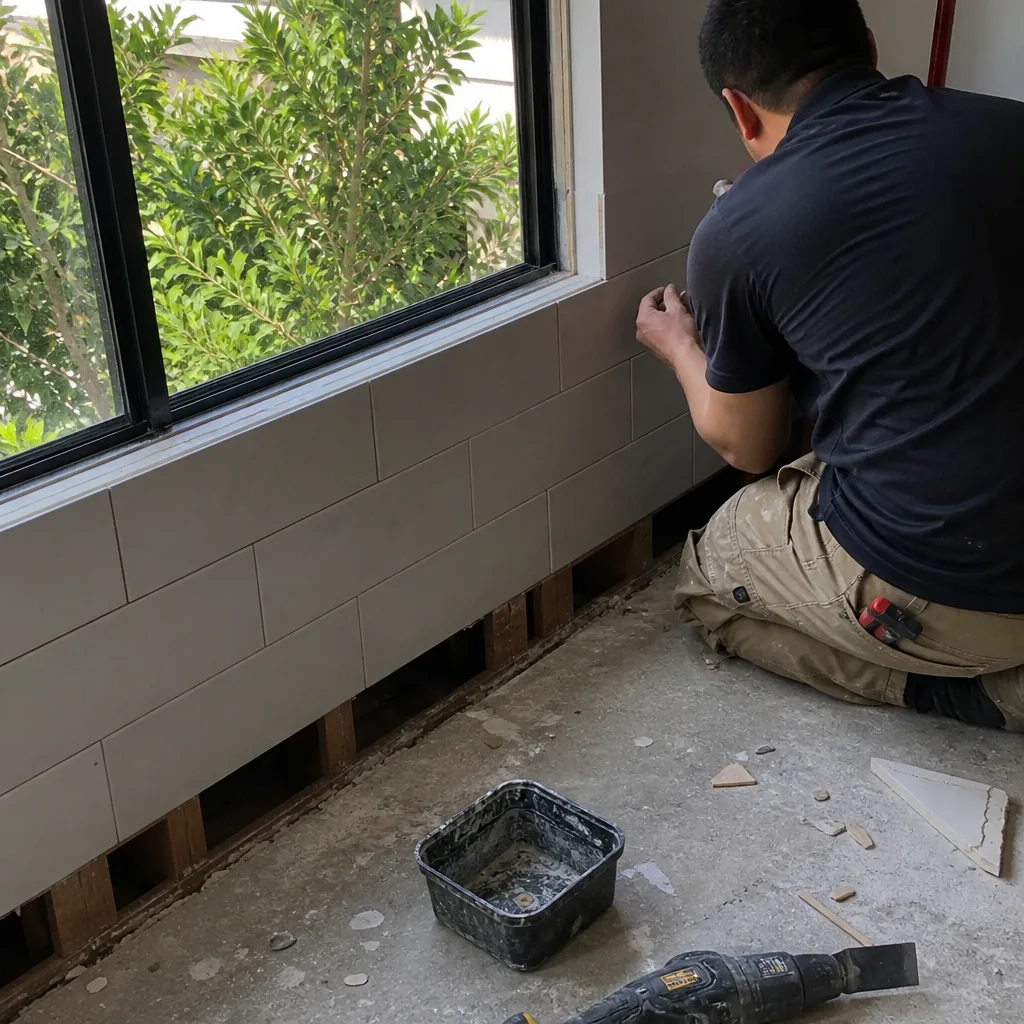
See the difference
 Before
 After
 Before
 After
 Before
 After
Cambria Service Pricing in Chinatown
Pricing depends on the size of the run, the condition of the substrate, and whether we’re doing a simple replacement or working inside an occupied historic shell with sequencing constraints. These are the ranges we quote for Chinatown work, and we hold to them:
| Cambria Service | Typical Range in Chinatown |
|---|---|
| Countertop Installation | $2,000 – $6,500 |
| Kitchen Island Installation | $3,000 – $10,000 |
| Backsplash Installation | $800 – $2,500 |
| Full Kitchen Remodeling | $14,000 – $45,000 |
| Small & Partial Kitchen Remodels | $9,000 – $20,000 |
What drives the cost here more than anything is substrate condition. A 1920s brick building with wet masonry and a moving floor will always cost more than a newer build-out because the prep work is doing the heavy lifting. We’re not going to quote you a number and then hit you with a change order once we open the wall, though. Our free estimate includes a site visit, moisture check on the substrate, and a written line-item quote. Call (866) 253-5808 to schedule yours. We’ll tell you what you’re actually looking at before you spend a dollar.
Serving Chinatown, CA — Our Local Coverage Area
We’re based in the Chinatown area and know this community well. Use the map below to see our service coverage — if you’re nearby, we can almost certainly help.
FAQs – Cambria Construction in Chinatown
Yes. We’ve templated and dry-fit Cambria runs inside Chinatown’s narrowest storefronts and walk-ups, where staging a full slab in the street isn’t an option. The answer is sequencing: we cut off-site where possible, template in-place, and coordinate material drops in short windows. For a restaurant build-out off the Grant Avenue corridor with almost no lot clearance, we shimmed a new subtop over a bowed original timber floor and routed the slab around a grease-laden duct chase the owners were rerouting, all while the restaurant next door stayed open. Call (866) 253-5808 and tell us about your site constraints; we’ll tell you if it’s workable and how we’d sequence it.
No. We’re an independent Cambria fabricator and installer, not authorized or sponsored by Cambria. What that means in practice: we’re free to tell you when a cheaper substrate fix is enough, and we’re equally free to tell you when a slab needs full replacement rather than a repair. We specify Cambria-approved materials because they’re the right product for a visible seam or edge, not because a manufacturer told us to.
Yes. On any Cambria installation or repair in Chinatown, we use Cambria slab material and Cambria-approved color-matched seaming adhesive and edge kits. We won’t substitute a generic filler on a visible seam. If a slab is cracked but the run is structurally sound, we repair and re-set using the correct adhesive. If the substrate is compromised, we’ll recommend replacement and explain why.
Most straight countertop and backsplash installations take two to three working days once templating is complete. Occupied historic buildings with sequencing constraints, moisture remediation, or floor shimming can add a day or two. We’ll give you a written schedule at estimate time, and we’ll tell you upfront if your building’s conditions are likely to add time. Call (866) 253-5808 for a project-specific timeline.
Countertop installation typically runs $2,000 to $6,500 depending on the size of the run and the condition of the substrate. Kitchen islands run $3,000 to $10,000. Backsplashes run $800 to $2,500. In Chinatown specifically, substrate condition drives the biggest price swings because moisture and moving floors are common. Call (866) 253-5808 for an exact quote after a site visit; our estimates are free and include a written line-item breakdown.
Service Areas Near Chinatown
We serve Cambria customers throughout Chinatown and the surrounding San Francisco neighborhoods. Chinatown service area is our home base, but we regularly work in Cambria service in San Francisco and over in the Cambria service in Mission District. If your building is within a reasonable drive of the city, call us; if not, we’ll point you in the right direction.
Book Your Cambria Service in Chinatown Today
If you’re planning Cambria in Visitacion Valley or Chinatown, let’s talk before you buy. Call (866) 253-5808 to schedule a free estimate. We’ll come out, check your substrate, template the space, and give you a written quote with real numbers. Same-day visits are available for urgent repairs.
Written by Nelson Fung, Owner and General Contractor at Timberline Contractors, serving Chinatown and the greater Bay Area.